
Crawl, Walk, Run: How the University of Illinois Integrated Project Management with their Existing ERP
“Higher education digital transformation” is everywhere in strategy decks. But for capital project teams on the ground, it’s not quite so simple.
The reality may look like:
- An ERP built for back-office finance
- A homegrown project system created “for now” 10 or 15 years ago
- Spreadsheets and email quietly stitching everything together
In that environment, basic questions get harder than they should be: Are project costs aligned with what finance sees in the ERP? Which change orders are fully approved? How confident are you in the numbers you’re using to request new funding?
Recently, we talked to Angela Jacobs, Senior Director in the Office of Capital Utilities and Real Estate for the University of Illinois School System, and Mike Wilson, Senior Assistant Vice President for Capital, Real Estate, and Utility services. We were joined by Sid Shah, President of OnIndus, an implementation and advisory partner of Kahua, and Kahua's Chief Evangelist Nicholas Johnson.
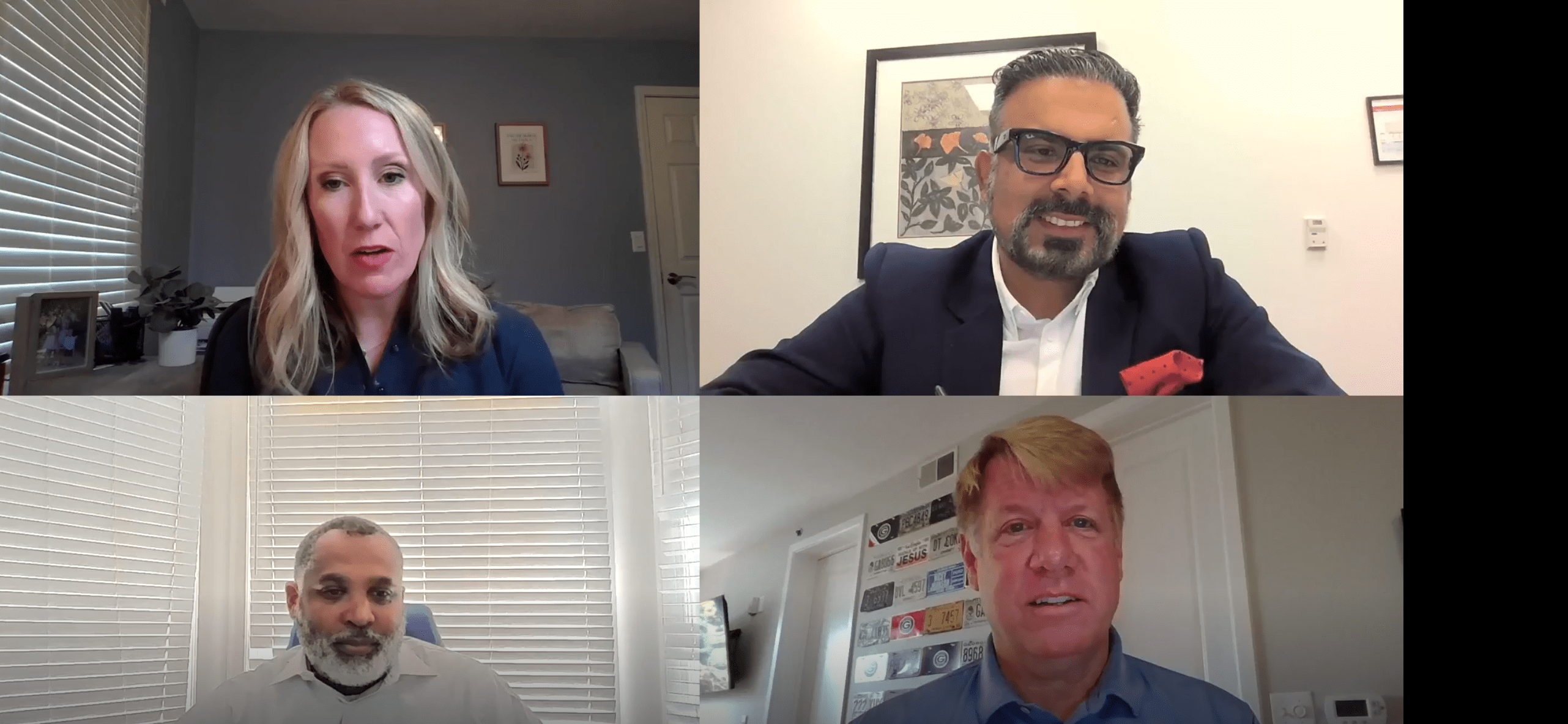
Jacobs, Wilson, and other university capital project leaders were managing more than a billion dollars in active capital projects across multiple campuses on a patchwork of homegrown tools.
“The systems we were using were great,” said Wilson. “They were homegrown, they were built 10 years ago. But at some point we started developing multiple systems.
“Not everything talked to each other and fully integrated with our financial systems. And so it was really a matter of a lot of duplicate entry. And there were spreadsheets everywhere!”
Jacobs pointed to another issue: access to information.
“We didn’t have a modern interface that would allow everybody from project managers to university leaders to get in and get the information that they need when they need it,” Jacobs said.
They didn’t set out to replace the ERP. They set out to connect project delivery and finance so teams could work in a system built for projects, with the ERP staying the system of record.
“You can’t have construction or capital without money and you need to be able to account for that properly,” Jacobs said.
Why universities outgrow homegrown tools
DIY tools and custom workflows can be the right call for a long time. They reflect campus reality, they fit local needs, and they help teams move away from paper.
“We like to give our universities the autonomy to do what is best for their individual purposes. Yet because we are a state institution, we have to adhere with all state regulations and procurement.”
Then portfolios grow. Reporting expectations grow. Audit pressure grows. And the System becomes the Systems. And then the systems have their own systems.
Common signs it’s time to rethink your setup:
- Project and financial data live in separate systems built a decade or more ago
- Spreadsheets fill the gaps between systems that don’t talk to each other
- Teams re-enter the same information in multiple places to keep records in sync
- It’s hard for project managers and leaders to get the information they need when they need it
- Audits, state reporting, or board questions require heroic effort to respond
“We like to give our universities the autonomy to do what is best for their individual purposes,” Jacobs said. “Yet because we are a state institution, we have to adhere with all state regulations and procurement.”
ERP and project management integration changes the day-to-day
Most universities aren’t looking to replace their ERP. It remains the financial system of record.
The shift happens when capital teams stop trying to work inside the ERP and instead use a project management system that matches how project teams operate, then connect it to the ERP so key financial data flows without retyping.
Illinois began implementing Kahua’s project management information system with the help of OnIndus, an implementation and advisory partner.
They began where the pain was obvious: payments.
Before integrating their ERP with the Kahua platform, the university’s prior process created extra work and extra risk.
“Prior to that, they not only had to manually put it into our ERP for payment, but they also had to then document it in the secondary system,” Jacobs said. “So it was sometimes work in triplicate.”
Following the integration with Kahua, in partnership with OnIndus, contractors and design professionals submit pay applications in the PMIS. Project and finance staff review and approve them in one place. Approved payments flow into the ERP without re-keying.
“That first one was huge for us! It was a big positive step forward,” Jacobs said.
Saving time was a major benefit for the University of Illinois, but more than that, their data quality and ability to respond to audit requests also improved.
Crawl, walk, run: A practical roadmap
Most campuses don’t have the appetite, or budget, for a massive replacement. Illinois took a phased approach and managed expectations early.
“Having the right people in the room does not mean have everybody in the room.”
“Having the right people in the room does not mean have everybody in the room,” Wilson said.
Wilson also emphasized setting expectations about what “phase one” really means.
“Setting expectations for our users that getting this to function and stand up on its own is the first primary goal we have,” he said. “And we’ll continue to invest in continuous improvement here on after.”
Crawl: Build the foundation
Focus on the work that makes everything easier later:
- Document end-to-end processes across campuses and departments
- Build a steering committee with capital, IT, and finance at the table
- Challenge steps that aren’t truly required by law or policy
- Assign a dedicated owner-side project manager
“Having the right people in the room does not mean having everybody in the room,” said Wilson.
Walk: start with high-impact wins
Pick a manageable pilot and a small set of use cases that prove value:
- A cross-section of projects across campuses and project types
- One or two ERP integrations (payments is a common starting point)
- Data migration in phases so teams keep useful history
Run: expand and think lifecycle
With the basics in place, the next step is to expand integrations and workflows:
- Add more integrations for contracts, change orders, and budget updates
- Formalize project closeout workflows in the project management system
- Enable online bidding and vendor qualification
- Make fuller use of design review, submittals, and other specialized apps
- Connect project data with facility condition assessments and, eventually, maintenance systems
The University of Illinois is already looking at what portfolio learning could look like over time.
“Being able to go back and look across our portfolio, say what didn’t go well or what did go well, and have that available to people,” Wilson said, was a valuable tool.
“I look forward to the day in the near future when our university leaders can go and use Kahua to inform decision making and to build strategy,” Jacobs added.
Takeaways from the University of Illinois (even if your campus looks different)
Higher education digital transformation isn’t “move to the cloud.” For capital programs, it’s making sure project delivery and finance can work off the same numbers without forcing everyone into the ERP.
Start with one painful workflow (payments is a good candidate). Prove you can reduce duplicate entry and tighten the audit trail. Then expand into contracts, change orders, closeout, and reporting.
That’s when digital transformation stops being a deck slide and starts being a better workday.